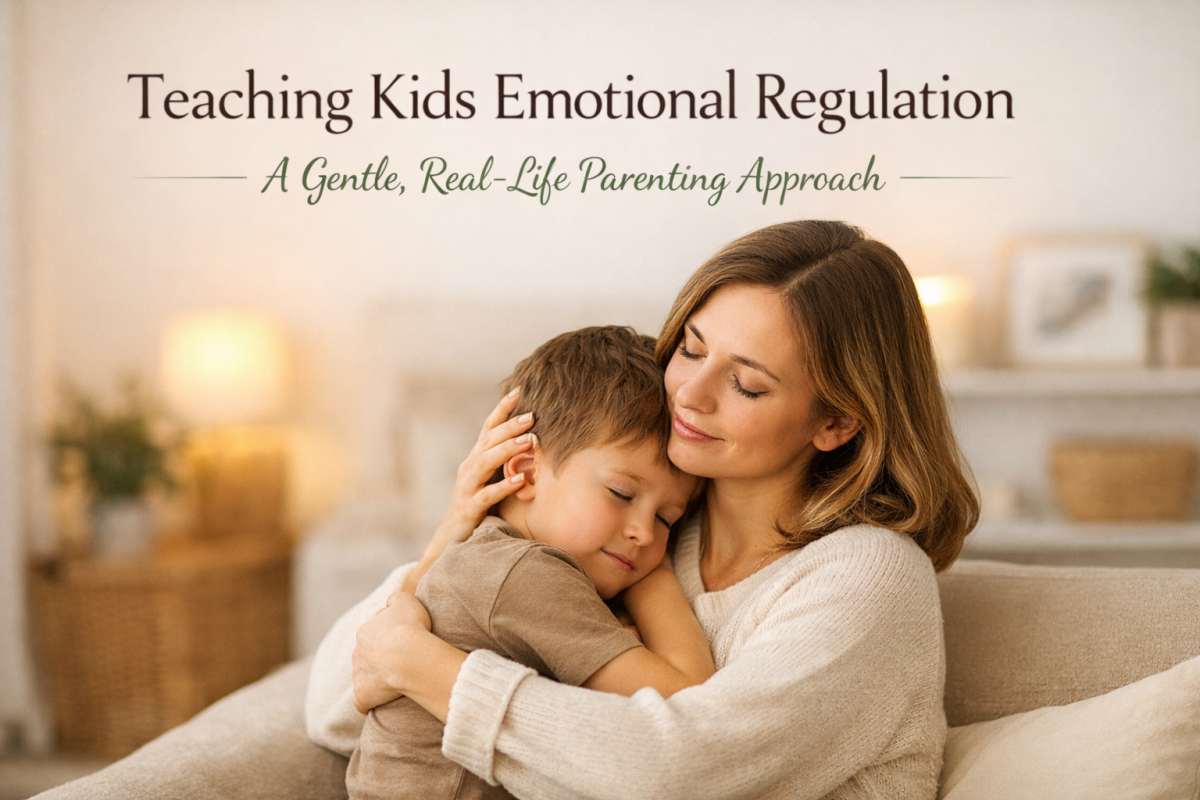
A gentle, heartful approach from our home
Big emotions are part of childhood.
In our home, they show up as tears over small disappointments, frustration when things don’t go as planned, and moments when feelings feel bigger than words. As a mom to two boys, I’ve learned that these moments aren’t interruptions to parenting — they are the work of parenting.
There was a time when I believed my role was to stop the emotion as quickly as possible. To distract. To correct. To move on.
But over time, and through many messy, imperfect moments, I realized something important:
My children don’t need their emotions fixed.
They need their emotions understood.
That realization changed everything.
What Emotional Regulation Really Means
Emotional regulation isn’t about teaching kids to “calm down” on command.
It’s about helping them:
- Recognize what they’re feeling
- Feel safe expressing emotions
- Calm their bodies when emotions feel big
- Trust that feelings come and go
Children aren’t born with these skills. Their brains and nervous systems are still developing, especially the parts responsible for impulse control and emotional balance. When emotions rise, logic isn’t available yet.
So when children melt down, shut down, or lash out, they’re not being difficult — they’re overwhelmed.
Regulation Begins With Connection

One of the most grounding truths I’ve learned is this:
Children borrow our calm before they can create their own.
When my boys are dysregulated, what they need most isn’t a lecture or a consequence. They need presence. A steady adult. A calm nervous system nearby.
That doesn’t mean I’m calm all the time.
It means I’m willing to slow down and reconnect — even when it’s hard.
How I Gently Teach Emotional Regulation at Home

1. I Name What I See
When emotions run high, I help my children put words to what they’re experiencing.
I’ll say:
- “That looks really frustrating.”
- “You seem disappointed.”
- “Your body feels angry right now.”
Naming emotions helps children feel seen. It also helps calm the brain, making it easier for them to move through the feeling instead of being stuck in it.
2. I Validate Before I Guide
Before correcting behavior, I acknowledge the emotion underneath it.
Instead of rushing to fix or redirect, I pause and say:
- “That was really hard.”
- “I understand why you feel upset.”
Validation doesn’t mean I allow hurtful behavior.
It means I honor the feeling before addressing the action.
Connection opens the door to learning.
3. I Teach Calm During Calm Moments
I’ve learned that meltdowns are not teaching moments.
So during peaceful times, we practice:
- Slow belly breaths
- Counting together
- Peace corner (One of the most meaningful things we’ve added to our home)
- Gentle movement
When emotions rise later, these tools already feel familiar.
4. I Let Them See Me Regulate Too
This one took time.
Now, when I feel overwhelmed, I say it out loud:
- “Mom needs a deep breath.”
- “I’m feeling frustrated, so I’m going to pause.”
My children are learning not just from what I say—but from how I handle my own emotions.
5. I Create Emotional Safety at Home
In our home:
- All feelings are allowed
- Not all behaviors are okay
- Love is never withdrawn
When children feel emotionally safe, they don’t need to hide their feelings. They learn to work through them.
When I Get It Wrong (And I Do)
There are days I lose my patience.
Days I raise my voice.
Days I wish I could rewind.
What I’ve learned is that repair matters more than perfection.
I sit down and say:
- “I’m sorry I yelled.”
- “I was feeling overwhelmed.”
- “I’m still learning too.”
Those moments teach my children accountability, empathy, and emotional honesty.
Emotional Regulation Is a Slow, Loving Process

Teaching emotional regulation isn’t about raising “well-behaved” kids.
It’s about raising children who:
- Trust their feelings
- Feel safe coming to you
- Know how to calm their bodies
- Carry emotional resilience into adulthood
Every time you pause instead of react
Every time you listen instead of rush
Every time you choose connection over control
You are doing meaningful work.
A Gentle Closing Reflection
This kind of parenting doesn’t always look impressive from the outside.
It looks quiet.
Slow.
Ordinary.
But in those quiet moments — in the soft lights of a peace corner, in a child taking a breath instead of breaking down, in a smile after tears — something powerful is happening.
You’re teaching your child that emotions aren’t something to fear.
That they are safe, even when things feel big.
That calm is not forced — it’s found.
And those lessons will stay with them far beyond childhood.
One gentle moment at a time 🤍
Leave a Reply